Click here to chat with me!
Just Like Mom's!!!
Just Like Mom's!!!
When designers very first dive into the Rust programming language, they are often welcomed by strict compiler guidelines, memory safety assurances, and an unique terminology. Among the most fundamental concepts to master early on is the Rust item.
In Rust, "items" are the foundational building blocks of a crate's syntax. They form the architecture of any Rust program, determining how code is arranged, scoped, and performed. Whether composing a small command-line energy or a massive dispersed systems backend, developers are constantly engaging with items.
This extensive guide explores what Rust items are, examines the various types offered, and takes a look at how they shape the structure of Rust applications.
In the official Rust Reference, an item is specified as a component of a cage. They are syntactical units that generally state something named, and they can appear at the module level (the top level of a file or module).
Consider items as the structural furnishings of a house. Simply as a home is made of spaces, doors, and windows, a Rust cage is made from functions, structs, characteristics, and modules.
Key qualities of Rust items consist of:
club) or private, managing whether other modules or cages can access them.Rust provides a rich set of items to handle everything from low-level data structures to top-level abstractions. Below is a thorough table detailing the main types of items discovered in Rust.
| Item Type | Keyword/ Syntax | Main Purpose | Example |
|---|---|---|---|
| Modules | mod | Arranges code into hierarchical namespaces. | mod networking; |
| Functions | fn | Defines a block of executable code. | fn calculate_sum() {} |
| Constants | const | Defines an unchangeable value with a repaired type. | const MAX_CONNECTIONS: u32 = 100; |
| Statics | static | Specifies a global variable with a static life time. | fixed GLOBAL_COUNTER: AtomicUsize = ...; |
| Structs | struct | Develops customized data types with named fields. | struct User name: String |
| Enums | enum | Defines a type that can be one of several variants. | enum Status Active, Inactive |
| Qualities | trait | Specifies shared habits (comparable to user interfaces). | quality Summarizable fn sum up(); |
| Implementations | impl | Carries out techniques or characteristics for types. | impl User fn brand-new() -> > Self {} |
| Type Aliases | type | Produces an alias for an existing data type. | type Result< T >=std:: outcome:: Result> |
; Macros macro_rules!/ macro Specifies procedural or declarative macros. macro_rules! say_hello| . ... Extern Blocks extern FFI(Foreign Function Interface)statements. extern"C"fn abs(input | | ||
| : i32)- > | i32; | . Usage Declarations use Brings items into the present local scope. usage sexually transmitted disease:: collections:: HashMap; Deep Dive into Essential Rust Items To truly understand how these items work | |
together, let's analyze a few of the mostregularly | utilized items in daily Rust advancement. | 1. Functions(fn)Functions are the |
Rust. Every Rust program starts execution in the primary function. Functions can accept arguments, return values, and rusthub take generic parameters.
)Information modeling in Rust relies greatly on structs and enums. Structs group related data together. They can be named-field structs, tuple structs, or unit structs(having no fields ). Enums in Rust are extremely effective.
Rust enums can hold data inside their variations, making them algebraic data types that get rid of the requirement for null guidelines
- . 3. Characteristics(trait) Traits are Rust's answer to user interfaces. They define a set of approaches that a type should carry out to be considered compliant with the characteristic.
- Traits enable polymorphism, permitting developers to write generic code that runs on any type sharing a particular behavior. 4. Implementations(impl)The impl item is utilized to associate logic(techniques and associated functions
)with structs, enums, or trait implementations. This is where object-oriented-like habits is mapped onto Rust's data-centric viewpoint. Presence and Modularity of Items By default, items stated in Rust are private to the module they reside in. This encapsulation is a core tenet of Rust's design, helping designers keep

rigorous borders within their codebases. To expose an item to other modules or external dog crates, developers use the pub( public)keyword. Typical Visibility Modifiers: club: Publicly available anywhere the parent module can be reached. pub(dog crate ): Visible only within the existing dog crate.
bar(super): Visible only to the moms and dad module. pub (in path): Visible just within a particular, restricted path. Finest Practices for Organizing Rust Items Structuring a big codebase needs cautious idea regarding how items are put within files and modules. Following recognized conventions ensures that a codebase stays maintainable as it grows. Keep files modular: Do not discard every item into a single main.rs file. Break logic down into logical modules utilizing mod.rs ormodern-day module declarations(mod filename;-RRB-. Leverage usage statements carefully: Bring items into scope cleanly. Group imports rationally-- usually basic library imports initially, external cages 2nd, and local crate imports last.Keep characteristic applications organized: Place impl blocks near to the struct meaning or in
dedicated submodules if the file ends up being too prolonged
. Expose a tidy public API: Use private modules internally to hide implementation information, and only use club on items that form the designated public user interface of your library or application. Summary Checklist for Rust Items Before composing your next Rust module, keep this fast reference list of guidelines regarding items in mind: Are all top-level elements valid items?(Functions, structs, enums, and so on)Is presence properly used? (Use pub just where necessary to
keep APIs tidy.)Are imports optimized?( Clean up unused use statements. )Are traits appropriately implemented?(Ensure all required quality methods are defined within impl blocks.)Rust items are the basic vocabulary of the Rust programming language. From the humble continuous to intricate trait executions, understanding how items behave, how they are scoped, and how they engage with exposure rules isessential for writing idiomatic Rust code. By mastering Rust items, designers get the ability to compose modular, safe , and extremely structured codebases that can scale gracefully from small scripts to huge business systems
. https://rusthub.com/
We help your business grow by connecting you to your customers.
Click here to chat with me!
Search our website now
Latest Products


Latest Posts
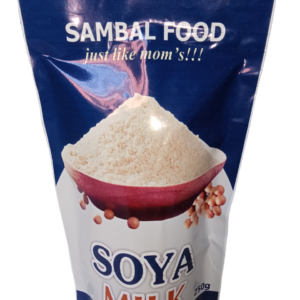
Nutritional benefits of Soyamilk Soy milk is a popular plant-based alternative to dairy milk, and it offers several nutritional benefits: Protein: Soy milk is a good source of plant-based protein, making it an excellent choice for vegetarians and vegans. It contains all essential amino acids necessary for human health. Calcium: Many brands of soy milk …
Dietary benefits of Soyamilk Soy drain could be a well known plant-based elective to dairy drain, and it offers a few nutritional benefits: Protein: Soy drain could be a great source of plant-based protein, making it an fabulous choice for veggie lovers and veggie lovers. It contains all basic amino acids vital for human wellbeing. …
Why soy milk is good for kids Food Ingredients: Soy milk is a good source of protein, which is essential for children’s growth and development. It also contains essential amino acids for muscle building and repair. Lactose free: Children who are lactose intolerant or allergic to milk can safely drink soy milk as an alternative …
Welcome to Sambal Enterprise, revolutionizing the way you access healthy food! Our agritech platform offers nutritious, natural products like Soyamilk and organic packaged foods, delivered straight to your doorstep through our interactive e-commerce platform. Leveraging blockchain technology and AI-powered models, we ensure seamless transactions, efficient inventory management, and exceptional customer support. Plus, our solar-powered food …